
Rain does not just make the windshield messy. It changes physics. Tire grip drops, stopping distances stretch, and depth perception falters when spray from trucks turns the middle lane into a gray wall. The drivers who stay safe in storms are rarely the fastest—they are the ones who adjust early and accept that arrival time is negotiable.
Whether you face a summer downpour or a cold front with crosswinds, the same priorities apply: see and be seen, reduce speed before you lose traction, and recognize when the smart move is to exit the highway entirely.
Before you leave: tires, wipers, and lights
Check tire tread depth with a quarter test—if you can see all of Washington's head, replace tires before storm season. Worn rubber hydroplanes sooner and stops later even with ABS. Replace streaking wiper blades; they fail exactly when you need them. Confirm headlights, taillights, and turn signals work—running lights alone may not illuminate the rear in some cars.
Slow down before the grip disappears
Many drivers brake hard once they feel floaty steering. By then water already separates tire from pavement. Reduce speed while you still have full control, especially entering curves, ramps, and bridges that freeze or flood first. If your speed feels fine until visibility drops, you were going too fast for conditions already.
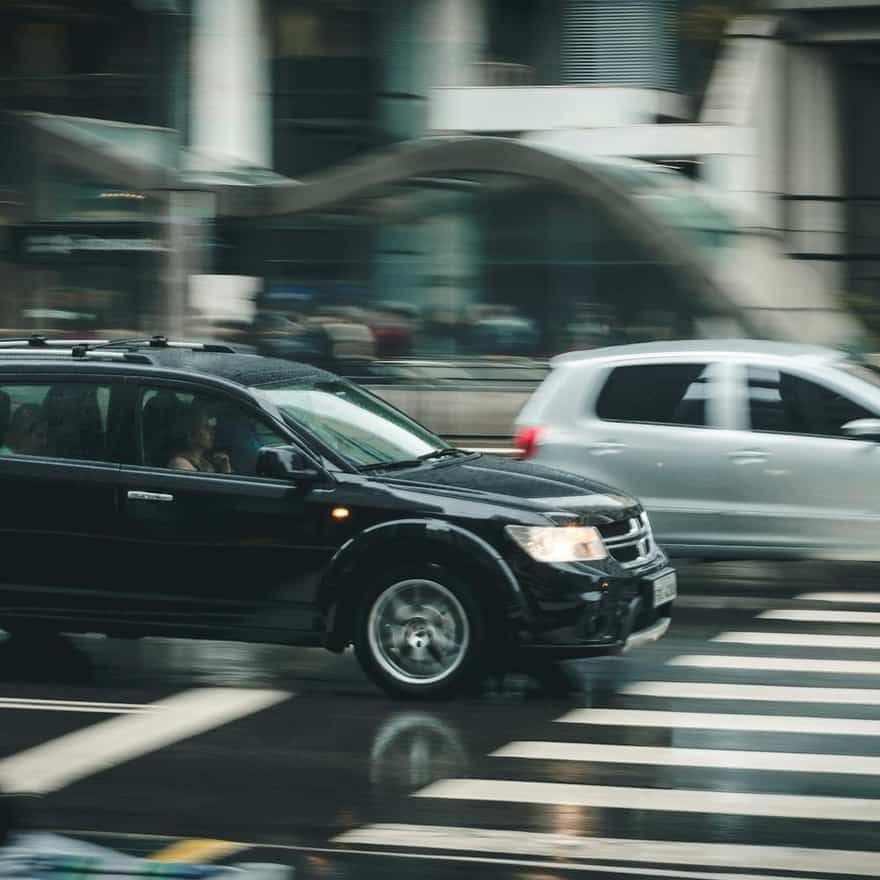
Headlights and hazards: use them correctly
Turn on low-beam headlights in rain—even in daylight—so other drivers see your silhouette. Avoid high beams in heavy rain; they reflect off droplets and blind you. Use hazard flashers only when stopped or crawling far below traffic speed, not while driving normally—constant flashers confuse following drivers about whether you are braking.
Following distance in wet weather
Double or triple your dry gap. ABS helps you steer while braking but does not shorten stopping distance on slick pavement. If you cannot count four seconds to the car ahead, back off. Large trucks throw rooster tails that eliminate your view for seconds at a time.
Hydroplaning: recognize and recover
Hydroplaning feels like light steering and rising engine rpm without acceleration. Ease off the gas, keep the wheel straight, and do not slam the brakes. Let the tires regain contact, then brake gently if needed. Sudden steering while floating can spin the car.
Standing water and flood risk
Six inches of moving water can knock a person down; a foot can float many vehicles. If you cannot see lane markings through water, turn around. Splash from deep puddles can stall engines in low cars and hide potholes that bend wheels. Use the highest lane when safe—crown of the road often drains better.
Wind, lightning, and visibility breaks
Crosswinds push high-profile vehicles and lightweight cars toward adjacent lanes. Keep both hands on the wheel and avoid passing trucks on the windward side during gusts. If lightning is close and you feel unsafe, a enclosed metal vehicle is relatively safe, but pulling into a sturdy parking structure beats sitting under trees.
When to pull over
- Zero visibility: if you cannot see lane edges or exit signs at a safe speed, exit and wait.
- Flooded ramps: do not gamble on depth—find higher ground.
- Stress overload: shaking hands and tunnel vision mean your brain needs a break.
Park fully off the roadway, hazards on, until rain intensity drops. A twenty-minute delay beats a collision in a blind merge.
After the storm
Test brakes lightly after driving through deep water—they may be wet and weak initially. Watch for debris, downed lines, and pedestrians using umbrellas with blocked peripheral vision. Dry pavement can still hold slippery oil until traffic scrubs it away—first hour after rain ends remains treacherous.
Storm driving rewards patience and punishes optimism. Adjust early, keep space, and treat every shiny lane as a question mark until your tires confirm grip. You will arrive wet and late far more often than you will arrive in an ambulance—that is the trade worth making every time.
Steering and lane position in deep spray
When the car ahead vanishes in spray, use lane markings and rumble strips as guides—but do not fight the wheel if gusts push you. Small corrections beat large sweeps that can hydroplane the rear tires. Stay off cruise control in rain; you want direct throttle control if grip fades.
Commercial vehicles and motorcycles
Give trucks extra room when passing—they throw walls of water that can hide entire cars beside you. Motorcycles need triple the space; their single contact patches lose grip first. Never pass a truck on the right in flooding lanes where splash is worst.
Interior fog and visibility tools
Run defrost before the windshield fogs opaque. Recirculate air sparingly in rain—it raises humidity. Rain-repellent treatments help at highway speeds but are not substitutes for fresh blades. Keep a microfiber cloth reachable for passenger-side smears that wipers miss.
Communicating with other drivers
Early gentle braking flashes taillights before you lose speed—helpful when visibility is short. Avoid sudden lane changes that surprise drivers who cannot see your full profile. If you must stop on a shoulder, pull far right, hazards on, and stay inside the vehicle unless guardrails and traffic speed make outside safer.
Storm skills compound: each time you slow early and arrive intact, you reinforce habits that matter more than any single gadget. Rain is predictable in one sense—it always reduces grip. Respect that physics and your odds improve every mile.
Family and cargo considerations in storms
Child seats and loose items become projectiles in hard braking on slick pavement. Secure cargo and explain to kids why sudden moves are dangerous when traction is low. A calm adult voice reduces back-seat panic that distracts you from scanning.